This is default featured post 1 title

http://www.todayfreshnews.blogspot.com provides latest news from India and the world.Get current top stories,business,sports and Bollywood headlines with videos,photo galleries and more

This is default featured post 2 title

http://www.todayfreshnews.blogspot.com provides latest news from India and the world.Get current top stories,business,sports and Bollywood headlines with videos,photo galleries and more

This is default featured post 3 title

http://www.todayfreshnews.blogspot.com provides latest news from India and the world.Get current top stories,business,sports and Bollywood headlines with videos,photo galleries and more

This is default featured post 4 title

http://www.todayfreshnews.blogspot.com provides latest news from India and the world.Get current top stories,business,sports and Bollywood headlines with videos,photo galleries and more

This is default featured post 5 title

http://www.todayfreshnews.blogspot.com provides latest news from India and the world.Get current top stories,business,sports and Bollywood headlines with videos,photo galleries and more

Monday, 27 August 2012

Republicans haunted by ghosts of Katrina

Republican presidential candidate Mitt Romney and his wife Ann in Wolfeboro, New Hampshire 27 August 2012Tropical Storm Isaac has passed Tampa, Florida, with no more than some heavy rain and high winds.
There really was no need to cancel the first day of the Republican National Convention.
But it is where the tropical storm is heading next, to a place of awful memory, that haunts them now.
If organisers of this convention wake clammy in their hotel beds, sweaty hands clutching hearts that beat too fast, it is because they have had a very vivid, very specific nightmare of how this week could end in disaster if they mishandle a tragedy.
A dream of presidential candidate Mitt Romney ripping into President Barack Obama, delegates going wild, triumphant and happy as the levees break, thousands flee in misery and New Orleans sinks beneath the waves.
For behind Tropical Storm Isaac lurks the ghost of Hurricane Katrina, raising shades of awful memory.
That hurricane hit New Orleans seven years ago this week and although former President George W Bush insists it is most unfair, the handling of that catastrophic storm has become a symbol for a Republican failure, a casual, callous indifference to the plight of poor black residents.
Imitating Popeye The opening of the Republican National Convention, Tampa, Florida 27 August 2012So there is talk, fanciful and fearful, I think, of cutting the conference to one day and Mr Romney making his speech from another venue.
They should be haunted too by Arizona Senator John McCain's suspension of his campaign in 2008 because of the economic crisis, and how silly that looked.
  But this is how strategists get when they feel the prize within their grasp, and the recent opinion polls will have excited them.
It all underscores how important it is for them to get the tone right this week.
It is about making Mr Romney appear worthy of becoming president. He - or his advisers - have hit on a curious formulation to achieve this.
It might not be easy to imagine Mr Romney with a small pipe, oversized, tattooed muscles, glugging back a can of spinach.
But the soon-to-be officially nominated Republican candidate has been quite insistent in recent interviews: he is like Popeye.
What he has in common with the cartoon sailor man is the declaration: "I am what I am."
This shoulder-shrugging, take-it-or-leave-it approach has more gravitas than the teenage "whatever".
It could either seem endearingly self-deprecating or arrogantly smug. It is also the very meaning of the name of the god of the Old Testament.
So, Mr Romney is not that careless of the company he keeps.
But it boils down to an admission that he has proved fantastically difficult to package. Politically, he is a hard sell.
Even this latest tactic is better suited to the rumpled and rumbustious, brawling seaman or jealous gods, than this stiff and awkward man.
This makes how they do decide to present him at the end of the week all the more interesting.
Many who pack into the hall this week will instinctively sympathise with the advice of former President Teddy Roosevelt: "When you are dealing with politics, you feel you have your enemy right in front of you and you must shake your fist at him and roar the Gospel of Righteousness in his deaf ear."
No doubt a great deal of fist-shaking will ensue, some will roar and I dare say the odd tub will be thumped too.
But I think Mr Romney will leave that to others and try to rise above the roaring.
One hint came from a video for the very brief official opening of the convention, which saw him looking noble over lines about the US being built on on immigration and diversity.
Not at all the harsh tone of the party during the primaries. Patriotism and unity are likely to be his watch words, as his advisers check the progress of Isaac on their blackberries and iPhones, fingers crossed the boss does not get dragged into choppy waters by any ghostly undertow off the Gulf.

Coalgate: Congress, BJP firm; Parliament to remain comatose


New Delhi: There seems to be little chance of Parliament being allowed to function for the sixth day in a row on Tuesday as the deadlock between the Congress and BJP over the CAG report on coal escalates. The government has said no to a trust vote claiming that it enjoys the support of Parliament even as the BJP is adamant that the Prime Minister should resign taking moral responsibility.
A day after Prime Minister Manmohan Singh strongly defended himself and dismissed the Bharatiya Janata Party's (BJP) allegations as motivated, Congress President Sonia Gandhi will address her party MPs at the Congress Parliamentary Party meeting on Tuesday.
Sources say Sonia is expected to take on the Opposition and accuse it of running an organised campaign against her party and the government. With both sides sticking to their stands, it looks like the Monsoon Session is heading for a washout.
Parliament saw a repeat of last week on Monday with no work and only chaos. The Prime Minister did come up with a reply but his answer got lost in the din in Parliament. He was not allowed to complete his statement and was forced to lay down the papers in both the Houses. This marks a new low for Parliament when the Opposition did not allow the Prime Minister of the country to speak and was perhaps the first time that he was forced to lay his statement as the Opposition MPs continued to demand his resignation. He came out of Parliament and made a statement calling the CAG report disputable.
He also claimed that the policy of allocation existed since 1993 and was followed by the earlier governments, adding that the UPA had introduced the auction idea in 2004.
The Prime Minister also hit out at the main Opposition party, the Bharatiya Janata Party (BJP), for disrupting Parliament. Reacting to the attack by the Prime Minister, the BJP termed his statement as an excuse.
The BJP came out all guns blazing and said it had no faith in the Prime Minister or the UPa government.
Rejecting the Prime Minister's statement on the issue of coalgate, the Bharatiya Janata Party (BJP) on Monday took a tough stand against the government demanding Manmohan Singh's resignation and cancellation of all 142 coal blocks allocated during the UPA rule.
The principle Opposition also hit out at the government that despite losing revenues, Congress earned massive profits from the coal allotments. The BJP said that the Congress profited from the coal blocks allocation and not the country. " Congress got 'mota maal' (heavy profit) from coal blocks," the party said.
"The PM's address has not weakened our case, but has made it stronger. Our charge is that the competitive bidding policy of 2004 was not implemented for the past eight years," said the Leader of Opposition in Lok Sabha, Sushma Swaraj.
"I believe that coal revenue has not gone to the government but to the Congress party. If there is an independent inquiry into coal allocation, the Congress party will be as guilty as the government," she said while addressing a press conference.
Meanwhile, as the crisis at home continues to stew, the Prime Minister will heading to Tehran on Tuesday to attend the 16th Non-Aligned Movement Summit. He is scheduled to meet many world leaders there including Pakistan's President Zardari and Iran's Ahmedinejad.

Google reacts to Apple's US patent victory over Samsung

Google has said that it does not want the ruling in the Apple-Samsung patent lawsuit to "limit" consumers' access to Android devices.

A US jury ordered Samsung to pay Apple over $1bn (£664m) on Friday after ruling it had infringed several of the iPhone maker's software and design innovations.
Samsung said it intended to appeal.
There has been speculation that the news could encourage handset makers to install the rival Windows Phone system.
Google released its statement late on Sunday in the US.
"The court of appeals will review both infringement and the validity of the patent claims," it said.
"Most of these don't relate to the core Android operating system, and several are being re-examined by the US Patent Office.
Samsung Galaxy Nexus S"The mobile industry is moving fast and all players - including newcomers - are building upon ideas that have been around for decades. We work with our partners to give consumers innovative and affordable products, and we don't want anything to limit that."
Apple vs Android
Apple has indicated it will seek sales bans on the 17 phones at the heart of the lawsuit at a hearing on 20 September.
The list does not include Samsung's current flagship handset, the Galaxy S3, but does include earlier versions of the model.
However, Apple could also use the verdict to try to halt sales of other models that infringe its pinch-to-zoom patent.

During the court case Apple revealed it had licensed some of its technologies to Microsoft. Its lawyers also showed pictures of Nokia's Lumia - which runs Windows Phone 7 - as an example of a handset that looked distinctive from its own.
In contrast, Apple continues to be involved in lawsuits against two other Android-handset makers: Motorola - which is owned by Google - and HTC.
Microsoft's opportunity
Following the Samsung verdict, Bill Cox, marketing director for Microsoft's Windows Phone Division tweeted: "Windows Phone is looking gooooood right now."
Dell, HTC, Samsung, LG and ZTE have already created Windows Phone 7 devices, but only Nokia has concentrated its efforts on the system.
One analyst said that the US ruling presented Microsoft with an opportunity to convince others to put their weight behind the next version of its mobile system.
"I think this will force a reset on Android products as they are re-engineered to get around Apple's patents," said Rob Enderle, principal analyst at the tech consultancy Enderle Group.
"[It should also] provide a stronger opportunity for both of Microsoft's new platforms - Windows 8 and Windows Phone 8 - because they come with indemnification against Apple, suddenly making them far safer."
However, manufacturers will have to weigh up Android's popularity before making a move.
Cross-licensing
According to recent data from analysts at IDC, Android had a 68.1% of the global smartphone market between April and June. Apple's iOS had 16.9% and Windows Phone/Windows Mobile had 5.4%. The data was based on shipments rather than sales.
Nokia Lumia 800, ZTE Tania, HTC Titan, Samsung Focus 8If Apple's patents hold up under appeal Google could recode Android to ensure there was no potential infringement, or handset makers could seek to pay their rival a licence fee.
And there is another alternative: Apple could ultimately seek a patent cross-licensing deal with Google despite its late chief executive Steve Jobs' vow to "destroy Android".

Part-way through the Samsung case Google filed its first lawsuit versus Apple since taking over Motorola. It alleged seven patent infringements, one of which involves the technology used in the iPhone's Siri voice-activated search tool.
Were Google to succeed it could call for a import ban on Apple's iOS products, potentially forcing its rival into a deal.
The case is driving share prices in a number of technology stocks.
Samsung's shares fell 7.5% in Seoul on Monday - their biggest drop since October 2008, wiping about $12bn off the companies value.
Nokia's shares rose about 10% on the Frankfurt Stock Exchange.
In New York, Apple's stock was about 2% higher in pre-market trade, Microsoft's about 1% up and Google's about 1% down.


eventeen Afghan partygoers beheaded by Taliban

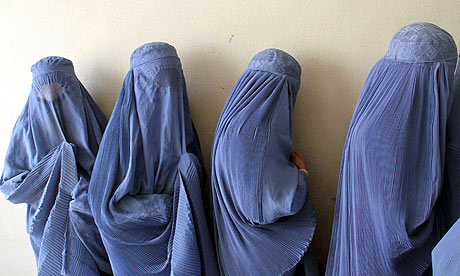
Afghan womenWomen voters line up to take part in Afghan elections in 2010: rights have improved since the reign of the Taliban but the country remains one of the most repressive in the world for women. 
Fifteen men and two women have been found beheaded in Afghanistan's southern Helmand province. Officials said the victims were killed by Taliban insurgents as punishment for attending a mixed-sex party with music and dancing.
The bodies were found in a house near the Musa Qala district, 46 miles north of the provincial capital Lashkar Gah, on Monday, said the district governor Nimatullah, who goes by only one name.
"The victims threw a late-night dance and music party when the Taliban attacked," on Sunday night, Nimatullah told Reuters.
There were no immediate claims of responsibility.
Men and women do not usually mingle in Afghanistan unless they are related, and parties involving both genders are rare and highly secretive affairs.
For the Taliban, flirting, open displays of affection and the mixing of men and women are vehemently condemned.
In June, Taliban gunmen stormed a luxury hotel near Kabul demanding to know where the "prostitutes and pimps" were, according to witnesses. Twenty people were killed.
The Taliban said it launched that attack on Qarga Lake because the hotel was used for "wild parties".
During their five-year reign, which was ended by US-backed Afghan forces in 2001, the Taliban banned women from voting, most work and leaving their homes unaccompanied by their husband or a male relative.
Those rights have been painstakingly regained but Afghanistan remains one of the worst places on earth to be a woman.
A spokesman for the Helmand governor, Daud Ahmadi, said a team had been sent to the site of the beheadings to investigate.

Govt begins moves to hold 2G spectrum auction in Nov

New Delhi: The Department of Telecom (DoT) today issued the much-awaited Information Memorandum (IM) on the proposed auctions in 1800 Mhz and 800 Mhz bands. A notice inviting applications (NIA) has been promised within a month.
An IM informs all potential bidders about the rules and eligibility criteria for the auction so that they can plan their auction strategy as well as the business case for the spectrum to be auctioned.
A senior DoT official explained that the IM has been issued  early to make sure that auctions happen on time but the IM is still subject to the Supreme Court agreeing to the government’s proposal to extend the auction timeline to November-December. Earlier, the apex court had set 31 August as the deadline for completion of auctions, and this deadline has already been breached.
NIA is the final document issued by the government before auctions commence. Reuters
“We are not running ahead of the SC, we are waiting for its decision. The IM does not signal anything unless the NIA is issued, which will take a month. By then, we will have done a pre-bid conference, addressed queries from potential bidders and issued clarifications on a lot many things,” this official told Firstpost.
NIA is the final document issued by the government before auctions commence. All prospective bidders have to apply and their applications are scrutinised for eligibility to participate before the auction is finally held. There is a general feeling that the auction process could spill over to January next year if the SC approves the new timeline proposed by DoT.
According to the IM, NIA will be issued on 28 September and the last date for submission of applications would be 19 October. E-auctions begin for 2G, or the 1,800 Mhz band, on 12 November but they will be held for the 800 Mhz band only two days after the 2G auctions have closed.
The IM makes it clear that a minimum of eight blocks each of 1.25 Mhz (10 Mhz in all) will be put to auction in all service areas. In addition, a provision will be made for spectrum up to three blocks each of 1.25 Mhz  (3.75 Mhz), wherever available, after reserving spectrum for refarming against allocation in the 900 Mhz band for the licences expiring during 2014 to 2016 and also taking care of guard-band requirements (a guard band is a narrow non-allocated band between two frequencies to ensure that usage on one frequency does not impact the neighbouring band).
This means topping up the eight blocks of spectrum put to auction up to a total of 11 blocks each of 1.25 Mhz to meet the requirements of new entrants, if such an exigency arises, and to ensure that the entire quantum of spectrum of 10 Mhz in each service area is allocated in the auction.
Incumbent telcos will be allowed to take a maximum two blocks of 1.25 Mhz in each service area.  New entrants will be required to bid for a minimum of four blocks each of 1.25 Mhz in each service area. New entrants will also be allowed to bid for one additional block of 1.25 Mhz in each service area.

Coal row: Manmohan rejects CAG report; BJP blames him for revenue loss

Dubbing CAG's computation of loss of Rs. 1.86 lakh crore in coal block allocation as "flawed" and "misleading", Prime Minister Manmohan Singh on Monday took the
battle to the Opposition camp, blaming it for thwarting the Centre's effort to shift to competitive bidding. Making a

statement in both Houses of Parliament amid uproar created by BJP members, Singh refused to be on the back foot, declaring that he takes "full responsibility" for the decisions taken as he contended that CAG's "observations" are "clearly disputable".With BJP creating disruptions, he read out a few portions of his four-page statement before laying it in Lok Sabha and Rajya Sabha which were repeatedly adjourned because of uproar.
Conscious that the CAG reports are normally discussed in detail in the Public Accounts Committee of Parliament where the ministry concerned responds, Singh said he was departing from this established procedure "because of the nature of the allegations that are being made and because I was holding the charge of coal minister for a part of the time covered by the report."
Responding point-by-point to the CAG's observations, the Prime Minister said even if the government auditor's contention that benefits accrued to private companies were accepted, "their computations can be questioned on a number of technical points."
He asserted that aggregating the "purported gains" to private parties "merely on the basis of the average production costs and sale price of CIL (Coal India Limited) could be highly misleading."
As coal blocks were allocated to private companies only for captive purposes for specified end-uses, he said, it would not be appropriate to link the allocated blocks to the price of coal set by CIL.
The Prime Minister, whose resignation is being sought by the BJP, asserted that "any allegation of impropriety is without any basis and unsupported by facts".
Seeking to corner the Opposition over the issue, he said the policy of allocating coal blocks without competitive bidding existed since 1993 and previous governments also allocated "precisely in the manner that the CAG has criticised".
He also said major coal and ignite bearing states like West Bengal, Chhattisgarh, Jharkhand, Orissa and Rajasthan "ruled by Opposition parties" were "strongly opposed" to a switch over to competitive bidding process.
On the charge of delay in bringing the Coal Mines Nationalisation (Amendment) Bill, 2000 to facilitate commercial mining by private companies, Singh said it was
pending in Parliament for a long time owing to "stiff opposition from the stakeholders" and government wanted broader consultations and consensus.

http://www.hindustantimes.com/Images/Popup/2012/8/pmcoal1.jpg
Singh said these state governments felt that a switch over would increase the cost of coal, adversely impact value addition and development of industries in their areas and dilute their prerogative in the selection of leases.
Citing instances, he said the then BJP chief minister of Rajasthan Vasundhara Raje had written to him in April 2005 opposing competitive bidding.
The Prime Minister quoted Raje as saying then that the competitive bidding was against the spirit of the Sarkaria Commission recommendations.
Singh also named another BJP chief minister Raman Singh (Chhattisgarh) saying that the latter had written to him in June 2005 seeking continuation of the extant policy of coal block allocation.
He said the Chhattisgarh chief minister had requested that any change in coal policy be made after arriving at a consensus between the central government and the states.
"The state governments of West Bengal (Left) and Orissa (BJD-led) also wrote formally opposing a change to the system of competitive bidding," Singh said.
The Prime Minister termed as "flawed" the premise of the CAG that the competitive bidding could have been introduced in 2006 by amending the existing administrative instructions and said it is "based on a selective reading" of opinions given by the Department of Legal Affairs.
Claiming that initially, the government had initiated a proposal to introduce competitive bidding by formulating appropriate rules, he said representatives of coal and ignite bearing states voiced their opposition to the proposed switch over in a meeting convened by the PMO on July 25, 2005.
Referring to that meeting, Singh said, "...it was further noted that legislative changes that would be required for the proposed change would require considerable time and the process of allocation of coal blocks for captive mining could not be kept in abeyance for so long given the pressing demand for coal."
The Prime Minister said it was, therefore, decided in the meeting to "continue with the allocation of coal blocks through the extant Screening Committee procedure till the new competitive bidding procedure became operational.
"This was a collective decision of the Centre and the state governments concerned," Singh said.
The Prime Minister noted that the issue was "contentious" and the proposed change to competitive bidding required consensus building among various stakeholders with divergent views, which is inherent in the legislative process.
Singh said the Ministry of Power felt that the auctioning of coal could lead to enhanced cost of production energy.
"In any case, in a democracy, it is difficult to accept the notion that a decision of government to seek legislative amendment to implement a change in policy should come for adverse audit scrutiny...The CAG report has criticised the government for not implementing this decision speedily enough ....But given the complexities of the process of consensus building in our Parliamentary system, this is easier said than done," he said.
Questioning CAG's computation of losses, the Prime Minister said coal blocks offered for captive mining are generally located in areas with more difficult geological conditions than those of the Coal India Limited.
"According to the assumptions and computations made by the CAG, there is a financial loss of about Rs. 1.86 lakh crore to private parties. The observations of the CAG are clearly disputable," Singh said.
He noted that the CAG has computed financial gains to private parties as being the difference between average sale price and the production cost of CIL of the estimated extractable reserves of the allocated coal blocks.
"Firstly, computation of extractable reserves based on averages would not be correct. Secondly, cost of production of coal varies from mine to mine even for CIL... Thirdly CIL has been generally mining coal in areas with better infrastructure and more favourable mining conditions, whereas the coal blocks offered for captive mining are generally located in areas with more difficult geological conditions," he said.
Singh also said that a part of the gains would in any case get appropriated by the government through taxation as Mines and Minerals (Development and Regulation) Bill, presently being considered by Parliament and 26 per cent of the profits earned on coal mining operations would have to be made available for local area development.
"Therefore, aggregating the purported financial gains to private parties merely on the basis of average production costs and sale prices of CIL could be highly misleading.
Moreover, as the coal blocks were allocated to private companies only for captive purposes for specified end-users, it would not be appropriate to link the allocated blocks to the price of coal set by CIL," he said.
Singh also said that from 1993, successive governments continued with the policy of allocation of coal blocks for captive use and did not treat such allocations as a revenue generating activity.
Singh said the "idea of action was conceived for the first time by UPA government" in the wake of increasing demand for captive mines and action was initiated to examine the idea in all its dimensions.
"While the process of making legislative changes was in progress, the only alternative before the government was to continue with the current system of allocations through the Screening Committee mechanism till the new system of auction-based competitive bidding could be put in place.
"Stopping the process of allocation would only have delayed the much-needed expansion in supply of coal ... postponement of coal blocks until the new system was in place would have meant lower energy production, lower GDP growth and also lower revenue," he said adding it was "unfortunate" that the CAG did not take these aspects into accounts.
Singh also said the government has initiated action to cancel the allocations of allottees who did not take adequate follow-up action to commence production.
The Prime Minister also warned "due action against wrong doers" on the basis of the on-going CBI investigations into the allegations of malpractices.
He said it has always been the intention of the government to augment coal production by making available coal blocks for captive mining through transparent processes and guidelines, which fully took into account the legitimate concerns of all stakeholders, including the state governments.

Read: PM's 32-point statement

"The implicit suggestion of CAG that Government should have circumvented legislative process through administrative instructions, over the registered objections of several state governments including those ruled by Opposition parties, if implemented, would have been undemocratic and contrary to the spirit of the functioning of our federal polity," he said.
Maintaining that "CAG's findings are flawed on multiple counts", Singh said now that report is before the House, "appropriate action on the recommendation and observations contained in the report will follow through established Parliamentary procedures".

PM making excuses: BJP

The Bharatiya Janata Party (BJP), however, said on Monday that Prime Minister Manmohan Singh was making excuses to hide  facts on the allocation of coal blocks.
"Country is upset with prime minister's statement. He is making excuses and is hiding the facts," BJP leader Prakash Javadekar told reporters after Manmohan Singh's statement in parliament on the issue that has seen adjournments of both houses during last week.
In the entire statement, Javadekar said, the only correct point is that the prime minister takes full responsibility for the decisions of the coal ministry.
"All the files related to coal allocation had his stamp as the coal minister and that is why we want him to resign," he added.

Palestine's first women racing team finds freedom behind the wheel

Palestine's first women racing team finds freedom behind the wheelRamallah: With her bright orange pedicure, Michael Kors handbag and skinny jeans, Maysoon Jayyusi hardly looks like a Palestinian speed racer -- until she gets behind the wheel.

The minute she starts up her SUV, she's off -- coursing ahead of the rest of the traffic, weaving among bewildered locals in the crowded streets of the West Bank city of Ramallah.

It's easy to see why the team she heads -- the Middle East's first female speed racing team -- has been dubbed the "Speed Sisters".

 The group of six women, Muslims and Christians from their 20s to mid-30s, have battled sceptical parents, the realities of the Israeli occupation and a sometimes disapproving public to become local stars and even the subject of a documentary.

"We feel we are free when we're doing this," teammate Mona Ennab, 26, said. "It's a way to escape everything around us."

Jayyusi, 36, said her love of speed was born out of frustrating hours stuck in long lines at Israeli checkpoints.

"I feel such depression at the checkpoints, but this speed makes me feel like I'm powerful, it helps me expel my depression," she told AFP.

"When the soldier finally lets you past, you feel like you want to fly."

Jayyusi had to take lessons behind her parents' backs after graduating with a business degree from Bir Zeit University, saving up her salary to pay for them.

"They didn't think I needed my licence, and it was expensive," she said.

But it paid off. In 2010, the skills displayed in her daily commute drew notice and she was approached by the head of the Palestinian Motor Sport and Motorcycle Federation, Khaled Qaddoura.

He offered Jayyusi the chance to participate in a training camp for drivers sponsored by the British Council, along with several other women, all with different levels of experience -- and the Speed Sisters were born.

Ennab also started driving without her family's permission before she was old enough to even take lessons. "I used to steal my sister's car and drive it around without a licence," she laughed.

Behind the wheel, she shows no fear, throwing her car around an obstacle course of cones in the parking lot of a West Bank slaughterhouse -- the best place available for the team to practise -- with what might seem reckless abandon.

Ennab grins cheekily as onlookers gasp at the sound of screeching tyres, watching the rear end of the car swing seemingly out-of-control in a semi-circle as she lets it "drift" around the cones.

-- 'I feel total freedom' --

For the women, getting behind the wheel is also a way to escape social demands.

"In our culture, there is a lot of pressure to listen to your parents, but when I get in the car, I can do what I want with it," Jayyusi said. "I feel total freedom."

Both women at first kept their speedracing secret from their families. Jayyusi's parents found out thanks to a local newspaper report.

"My mum was like 'Oh my God, you're going to die!," she recalled, adding that her mother is still too afraid to watch her drive -- though supports her fully.

Ennab's family has also come round to their daughter's need for speed, and her mother is now a fixture at all her competitions across the West Bank.

Betty Saadeh, 31, another team member, faced no such challenge.

A glamorous blonde who drives a sleek Peugeot sportscar thanks to a sponsorship deal with a local branch of the French carmaker, she comes from a family of racers and said her only pressure is competition from relatives.

"My dad is a champion racer in Mexico and my brother is too," she said. "It's in my blood -- there's definitely a family rivalry."

Saadeh was born in Mexico then lived in the United States, but moved back to the West Bank with her family at the age of 13.

"I want to be here, it's my country. Why not show the world that Palestinian women can do anything?"

For Saadeh, racing isn't political but she says she's proud to represent the Palestinian Territories.

"When I compete with the Palestinian flag, it shows what we want, that we want a country, that we deserve a country."

There is no escaping the fact that Israel's presence in the West Bank affects the team's ability to practise and drive.

Their one-time practice spot by the Ofer military prison has become unusable because of the debris -- stones, rubber bullets and tear gas canisters -- left behind from clashes between protesters and Israeli troops.

And long-distance rally driving in a territory carved up into three administrative areas and dotted with military checkpoints is impossible, Jayyusi said

Undaunted, the women have major ambitions, boosted by a recent trip to the famed Silverstone racetrack in Britain.

"I want to compete internationally at Formula One," Saadeh said. "My dream is to race at Silverstone as a professional.

Share

Twitter Delicious Facebook Digg Stumbleupon Favorites More